The Bertolucci Brothers

With a career that spans over six decades, Bernardo Bertolucci never seems to run out of stories to tell or innovative ways to shoot them. Born in the northern Italian city of Parma in 1940, Bertolucci grew up surrounded by arts and literature. His father was a writer, film critic, and art history professor. He encouraged his son's creativity and interest in films and frequently took him to film screenings. By the age of 15, Bernardo Bertolucci had made 2 short films and was becoming a respected writer. His first book, "In Cerca del Mistero" (In Search of Mystery), won the Premio Viareggio, one of the top literary awards in Italy.  

Bertolucci originally set out to be a writer and poet like his father. In 1958, at the age of 18, he enrolled in the University of Rome and attended the Faculty of Modern Literature. Shortly thereafter, he started working under the guidance of Pier Paolo Pasolini. Bertolucci's father had helped Pasolini publish his first novel, and Pasolini paid back that favor by hiring Bertolucci as a first assistant on his 1961 film "Accattone," and that is when Bertolucci's passion for cinema took over. Following his work on that film, he quit school and embarked on his own independent study of film. 

In 1962, Bertolucci made his first feature film, which was written by his mentor, Pasolini. The film titled "La commare secca" (The Grim Reaper) is a murder mystery in which the homicide of a prostitute is investigated through a series of flashbacks by the person who actually committed the crime. The film was not a big commercial success but earned him some recognition among critics. Then, just two years later, he made another film, "Prima della rivoluzione" (Before the Revolution). Not a big commercial success either, it did win him some more acclaim as it was shown at the Cannes Film Festival in 1964. That second film prompted Bertolucci to leave the wings of Pasolini to follow his own vision. The result has been a career of character-driven films with complicated subject matter that is sometimes scandalous in nature. The scandalous element of his work has been noted several times throughout his career, especially in his representation of women.

The most high-profile scandal surrounding his work was with the 1972 film, "Last Tango in Paris." The scene that brought so much attention and criticism to the film was an anal sex scene involving Maria Schneider's character, Jeane. Critics also took offense to the fact that her character was naked through much of the film while her male counterpart, played by Marlon Brando, was usually fully clothed. The sex scene had life-changing repercussions for those involved. Actress Maria Schneider was just 20 years old at the time and claimed she did not know about the scene until just moments before filming it and that she was crying real tears because she felt humiliated and violated by both Bertolucci and Brando. Although the onscreen couple did not actually have sex in the scene, the fact that she was not told how the scene would go down caused her emotional distress. The experience prompted her to become a women's rights advocate, particularly fighting for more female directors in Hollywood. Schneider passed away in 2011, never having forgiven Bertolucci for the emotional trauma caused by her involvement in that film. Marlon Brando also felt deceived by the director. He said publicly that after seeing the final cut of the film, he was horrified and traumatized by the way in which that scene was shot and edited. The film actually prompted criminal proceedings to be brought against Bertolucci in Italy for the scene, and the film was pulled from distribution by the censorship commission. An Italian court revoked Bertolucci's rights and ended up giving him a four-month suspended prison sentence. Years later, after the censorship commission was done away with, a slightly censored version of the film found its way back to public distribution. For as much criticism as the film received, it is also credited for changing the way eroticism was seen in Hollywood and opening the doors for this type of subject matter in general-release films.

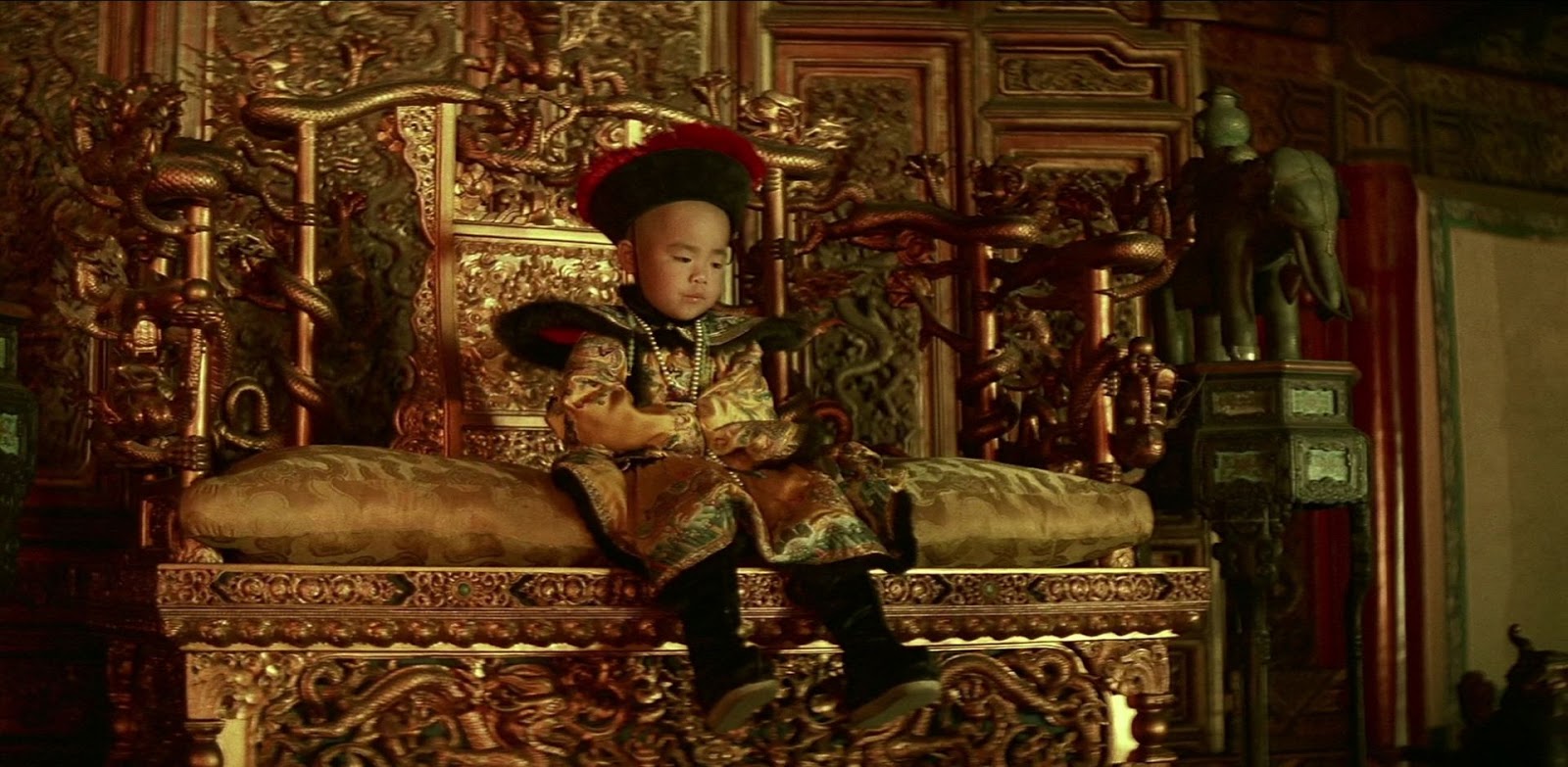
Bertolucci made a number of films in the 70's and 80's; some successful, some not.  However, his relevance as a filmmaker seemed to become stronger with each film he made, regardless of the film's commercial success. His 1976 film, "Novecento" (1900), featured an international cast that brought together A-listers from Italy, France, and America. The film stars Robert De Niro and France's beloved Gerard Depardieu and follows the lives of two men during the political unsettling that took place in Italy during the first half of the 20th century.  Bertolucci's next epic film, which won a whopping 9 Oscars at the 60th Academy Awards, was "The Last Emperor." The biographical film tells the story of Aisin-Gioro Puyi, the last Emperor of China. It was the first feature film cleared by the government of the People's Republic of China to be filmed in the Forbidden City, the Chinese imperial palace that lasted from the Ming Dynasty to the end of the Qing Dynasty.   

In the last couple of decades, Bernardo Bertolucci has continued with his style of poetically shot movies with complicated characters and political unrest. Stealing Beauty, starring Liv Tyler in 1996, and The Dreamers in 2003 were his biggest box office hits in recent years.  His most recent film was released in 2012. Titled Io e te (Me and You), the story follows Lorenzo, an introverted 14-year-old who spends a week hidden in the basement of his house, and his rebellious step-sister, Olivia, who appears on the scene to disturb his solitude. The film was screened out of competition at the Cannes Film Festival and had a limited U.S. release. Bertolucci's films are widely popular to this day, and many are still available through websites like Amazon.

 Giuseppe Bertolucci

“I owe everything to Giuseppe Bertolucci. He was my first friend, my first director, my first author. He was the one to teach me how to read poetry, to move, to walk in this world, to look at the sky, to understand where beauty comes from, and to recognize it.” Those words came from Roberto Benigni upon the passing of Italian filmmaker Giuseppe Bertolucci, the younger brother of renowned director Bernardo Bertolucci.

Giuseppe Bertolucci got his start in cinema in the 1970s by working on his older brother’s films. He directed his first feature film in 1977, "Berlinguer ti voglio bene" (Berlinguer, I love you), which stars a very young Roberto Benigni. The film tells the story of Italian society in the 1970s when the major protests were over, and Italians were enjoying an economic boom. The film is set in the Tuscan town of Prato, where Benigni grew up, and features the language dialect of Dante.

Throughout his entire career, Bertolucci went back and forth as screenwriter and director, co-writing some of the most beautiful films in Italian cinema, including the classic comedy "Non ci resta che piangere" with Roberto Benigni and Massimo Troisi. The film takes the comedy duo on a trip through time. Released in 1984, the film was a huge success in Italy and was recently restored and made available on DVD.

Giuseppe Bertolucci is known in Italy for his work at Bologna’s Cineteca, a film archive that houses more than 18,000 films. The center is internationally recognized for its excellence in film preservation and restoration.

In recent years, Bertolucci focused his energies on making documentaries, creating two films about Pier Paolo Pasolini. Perhaps he was inspired to tell the filmmaker’s story by his work at Cineteca, which has an extensive archive on Pasolini that includes photographs, films, magazines, catalogs, press clippings, theses, speeches, and radio programs.

After battling a two-year illness, Giuseppe Bertolucci passed away on June 16, 2012, in the Pugliese city of Lecce. He was 65 years old.

Comments

Popular posts from this blog

A Conversation with Sergio Castellitto

Sergio Castellitto has made a profound impact on world cinema, both in front of and behind the camera. Born in Rome in 1953, Castellitto graduated from film school in 1978 and credits American cinema with pushing him toward a career in acting. His work has garnered numerous accolades, largely due to his immersive, original approach to projects in film, television and theatre. Castellitto is fluent in French and English, which has contributed mightily to his international stardom. But it's the actor's trademark brown eyes and charming everyman qualities that have lent his various characters -- even the ones that are rough around the edges -- an air of dignity that other actors might not have achieved. Sergio Castellitto and Margaret Mazzantini, 2005 Films such as "Paura e Amore," "L'uomo delle stelle," "Caterina va in città," and "Bella Martha" heralded Castellitto as a versatile artist with far-reaching abilities. But it ...

Golden Age Masterpiece: Luchino Visconti’s 1957 “White Nights”

Photo Credit: Archivio Luce Cinecittà Luchino Visconti’s 1957 film, “White Nights” (“Le notti bianche”), offers a thoughtful and poignant exploration of themes such as loneliness, desire and emotional vulnerability. Based on Fyodor Dostoevsky’s novella of the same name, it transports the tale from 19th-century St. Petersburg to a dreamy mid-20th-century Italian setting. While Visconti remains largely faithful to Dostoevsky’s narrative, his characteristic style infuses the film with emotional depth, striking visuals, and a focus on class and societal constraints.   The story follows a young man named Matteo, played by Marcello Mastroianni, who lives a solitary life in a small Italian town. One evening, he encounters a beautiful young woman named Natalia, portrayed by Austrian-Swiss actress Maria Schell, who is also feeling isolated. Although she is initially reluctant, Natalia eventually confides in Matteo about her love for a man who has promised to return and marry her, but he ha...

Alberto Sordi Like You've Never Seen Him..

Twenty two-year-old Alberto Sordi on the set of "I tre aquilotti" Directed by Mario Mattoli, the 1942 film"I tre aquilotti" (The Three Pilots) is set at the Royal Air Force Academy of Caserta where three students– Mario (Carlo Minello), Marco (Leonardo Cortese) and Filippo (Alberto Sordi) become close friends. Towards the end of his studies, Marco casually meets and falls in love with Mario's sister, Adriana (Michela Belmonte). Mario shows his opposition to Marco and this causes the end of their friendship. Due to an accident during a training flight, Marco is demoted from the sailors role to the service role, thus not getting the military pilot's license. After the end of the course, the three friends split up for various destinations but all three find themselves in Russia, with Mario and Filippo already decorated with medals of merit, while Marco is in charge of logistics services. During a war action Mario is hit in flight and is forced to land in en...

Sergio Leone: Recreating the American Cowboy

Henry Fonda in "Once Upon a Time in the West" He's an Italian filmmaker who left his mark on the world by telling uniquely American stories. Known throughout the world for his iconic Spaghetti Westerns, Sergio Leone comes from a family of filmmakers. His mother, Edvige Valcarenghi whose stage name was Bice Walerian, was a silent movie actress who gave up her career to become a wife and mother when she married Vincenzo Leone in 1916. Vincenzo whose stage name was Roberto Roberti, was a noted filmmaker who directed and acted in movies during the silent film era. He actually tried to discourage his son from pursuing a career in cinema, so Sergio Leone briefly studied law. But then fate stepped in and he landed a position as an assistant on Vittorio De Sica ’s "The Bicycle Thieves"   in 1948. Leone also briefly appears in the film, as part of a group of German priests taking shelter from the rain. Although he emerged during the rise of Neorealism, Leone mig...

The Extraordinary Career and Legacy of Dino De Laurentiis

Producer Dino De Laurentiis was one of the most prolific filmmakers ever, having produced or co-produced more than 600 films during a career that spanned seven decades. His legacy continues not only through the work of his children and grandchildren but also through a new generation of filmmakers in his Italian hometown. De Laurentiis was born in the shadow of Mount Vesuvius on Aug. 8, 1919, in the city of Torre Annunziata, located just minutes from the ruins of Pompeii. As a child, he worked at a local pasta factory owned and operated by his father. That experience had a profound effect on him, shaping a lifelong passion for food and an appreciation for business. At the age of 17, he decided to leave home for the big city. He arrived in Rome and enrolled in the prestigious film school, Centro Sperimentale di Cinematografia. After attending the school for about a year, he managed to produce one film in 1940, The Last Combat , before having to leave Rome temporarily for m...