
Ornella Muti: Five decades of Acting and Still Going Strong

Ornella Muti was born Francesca Romana Rivelli in Rome in 1955 to a Neapolitan father and an Estonian mother. She began her career as a model during her teenage years and made her film debut in 1970 with “La Moglie più bella” (The Most Beautiful Wife).  Her follow-up role was in the 1971 film, “Sole nella pelle” (Sun on the Skin), in which she played the daughter of wealthy parents who runs off with a hippie they don’t approve of. The film offers a telling journey through Italian society in the seventies, with its political climate, breathtaking seaside, and the styles and cars of that time.  Much of the film is set amid the sunny Italian seaside and captures the innocence and beauty of first love.  
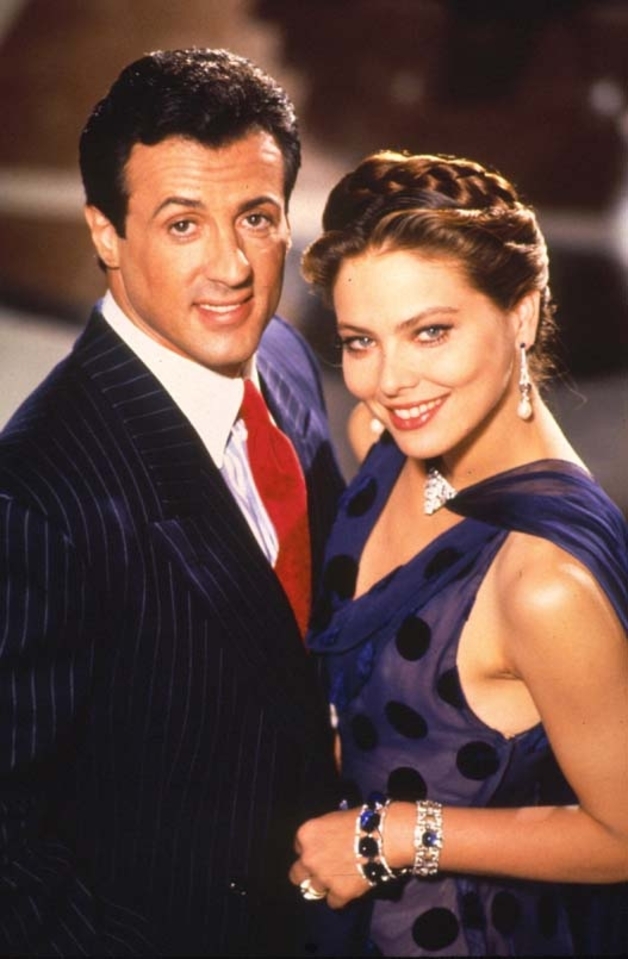
Muti made her American film debut in 1980 with "Flash Gordon." She played the role of Princess Aura. She’s appeared in two other American films, including “Oscar,” directed by John Landis and starring Don Ameche, Chazz Palminteri, and Sylvester Stallone. In 1992, she was part of the all-star cast of Eugene Levy’s “Once Upon a Crime.” Since then, she’s chosen roles mostly in Italy and France.
Muti’s range is impressive. Although she’s been granted such titles in her films as "Appasionata" and "Bilingual Lover,"her extraordinary beauty does not keep her from playing roles that focus more on the soul and conflicts of her characters. She’s naturally funny and brings a subtle sense of humor to her roles. This was most apparent in Lo zio d’America in which Muti acted opposite Christian De Sica. The story highlights the usual drama found within any given Italian family and the whole host of unfortunate circumstances and coincidences that follow the protagonist. The film earned such rave reviews that a sequel was made and aired shortly thereafter on RAI Italia.
Muti has three children. Her oldest daughter, Naike Rivelli, is following in her mother’s footsteps. The young actress works mostly in Italy and Germany and is versatile, taking on thrillers, dramas, and the occasional period piece. She received positive reviews for her role in the 2008 horror flick “Open Graves” about a group of surfers who discover an old board game that claims a life every time it's played. 

My moment with Ornella Muti in Maratea, Italy
These days, Muti is enjoying her social media celebrity status. She posts pictures and videos of old films, nostalgic memories, her beautiful family, and special appearances. She recently received an award for her diverse career at the Giornate del Cinema Lucano, an annual film festival held in the gorgeous seaside town of Maratea, southern Italy. That's where I had the pleasure of meeting her. Although I was a bit star-struck, having watched her movies for about 20 years, she was gracious enough to pose for a picture with me. It will always remain a lovely memory. I recommend  checking her out on Instagram, where you can follow her many fun and zany mother-daughter adventures with Naike Rivelli.

Comments

Popular posts from this blog

The Legend of Alberto Sordi - Rome's Eternal Son

′′They will always judge you, whether you behave well or if you behave badly. So screw it and live as you want but above all don't listen to anyone.′′  - Alberto Sordi By giving his fellow Italians something to laugh about during tumultuous times, he emerged as his generation’s King of Comedy. One of Italy’s best-loved personalities, Alberto Sordi played a pivotal role in Italian cinema from the end of World War II to the postwar economic boom of the 1950s. During those tumultuous years, he gave his countrymen a hearty laugh when they might have otherwise cried. Former Italian President Carlo Azeglio Ciampi perhaps said it best: “Alberto Sordi interpreted the feelings of Italians, especially in their most difficult and tough moments.” Born in the Trastevere neighborhood of Rome in 1920, Sordi grew up in a creative household. His mother was an elementary school teacher and his father, a professional musician for the Rome Opera House. A young Sordi joined the children’s choir o...

Alessandro Gassmann: Born to Act

Alessandro Gassmannin his directorial debut "Razzabastarda" Alessandro Gassmann is the son of the iconic Italian actor/director Vittorio Gassman and French actress Juliette Mayniel. He was born in 1965 and grew up around cinema royalty.  He made his cinema debut in 1982 at the age of 17 in his father's autobiographical film, "Di padre in figlio." He went on to study his craft under his father's direction at the Theatre Workshop of Florence.  Vittorio Gassman was very active in theater and seemed just as comfortable on stage as he did in front of the camera. Known for his powerful interpretations of Dante's "Inferno" and "Paradiso," it is no surprise that he nurtured his son's acting aspirations on stage before he launched his career in television and film. One of Gassmann's strong qualities, which he undoubtedly inherited from his father is his incredible range and ease in going from genre to genre. He can play ...

Federico Fellini: A Look into the Life and Career of an Icon

A Fellini family portrait  “The term became a common word to describe something on the surface you can say is bizarre or strange, but actually is really like a painter working on a film,” said Martin Scorsese when asked to define “Felliniesque,” an adjective inspired by one of the greatest filmmakers of all time. The oldest of three children, Federico Fellini was born in the seaside town of Rimini in 1920. His father was a traveling salesman, so his mother was left to do the bulk of raising the children. One can argue that Fellini was born for his destiny. “You could tell that even as a child, he was different and unique. He was very intelligent, well above average. He was always the one to organize things, direct the others, make up games. He could control the other kids with just a look, said Fellini’s sister, Maddalena, in an interview with journalist Gideon Bachmann.  Not only was Fellini directing the children, but he was also putting on shows and charging ...

The Timeless Vision of Pier Paolo Pasolini

Pondering his films and poetry, I wonder if the uniqueness of Pier Paolo Pasolini's films was rooted in his unconventional childhood. Born in Bologna in 1922, Pasolini's father was a lieutenant in the army, and his family was always moving. He grew up in various small towns in Northern Italy. After his parents separated, he spent most of his time in his mother's hometown of Casarsa, in the region of Friuli Venezia Giulia. There, he grew to respect the area's peasant culture and began to write poetry in the region's dialect. He studied literature and art history at the University of Bologna and was drafted into the army during World War II. The war proved to be especially tragic for his family as his younger brother was executed by Communist partisans. Following the war, he returned to Casarsa where he worked as a teacher and ironically became a leading member of the Communist party there. Pasolini was later expelled from the party due to allegations of homo...

Portrait for a friend: 'How Strange to Be Named Federico'

  Ettore Scola on the set of 'How Strange to Be Named Federico' A sentimental portrait for a friend, Ettore Scola’s 2013 “Che strano chiamarsi Federico” (“How Strange to Be Named Federico”) is both a tribute to Federico Fellini and a reflection on friendship, and an artist’s passion for filmmaking.  Scola created a personal and imaginative film that moves between documentary, fiction, memory, and fantasy, bringing to life important moments he shared with Fellini during their decades-long friendship as well as highlights from Fellini’s own life and career while showing how deeply Fellini influenced Scola himself. The result is an inviting, nostalgic, and at times playful portrait of one of Italy and the world’s most beloved filmmakers. The film opens on the beach where a figure depicting Fellini sits in a director’s chair and watches performers audition for him. The beach is likely symbolic of Fellini’s roots in the seaside town of Rimini and his beach-going days on the c...