Matilde Gioli: Destined to Act

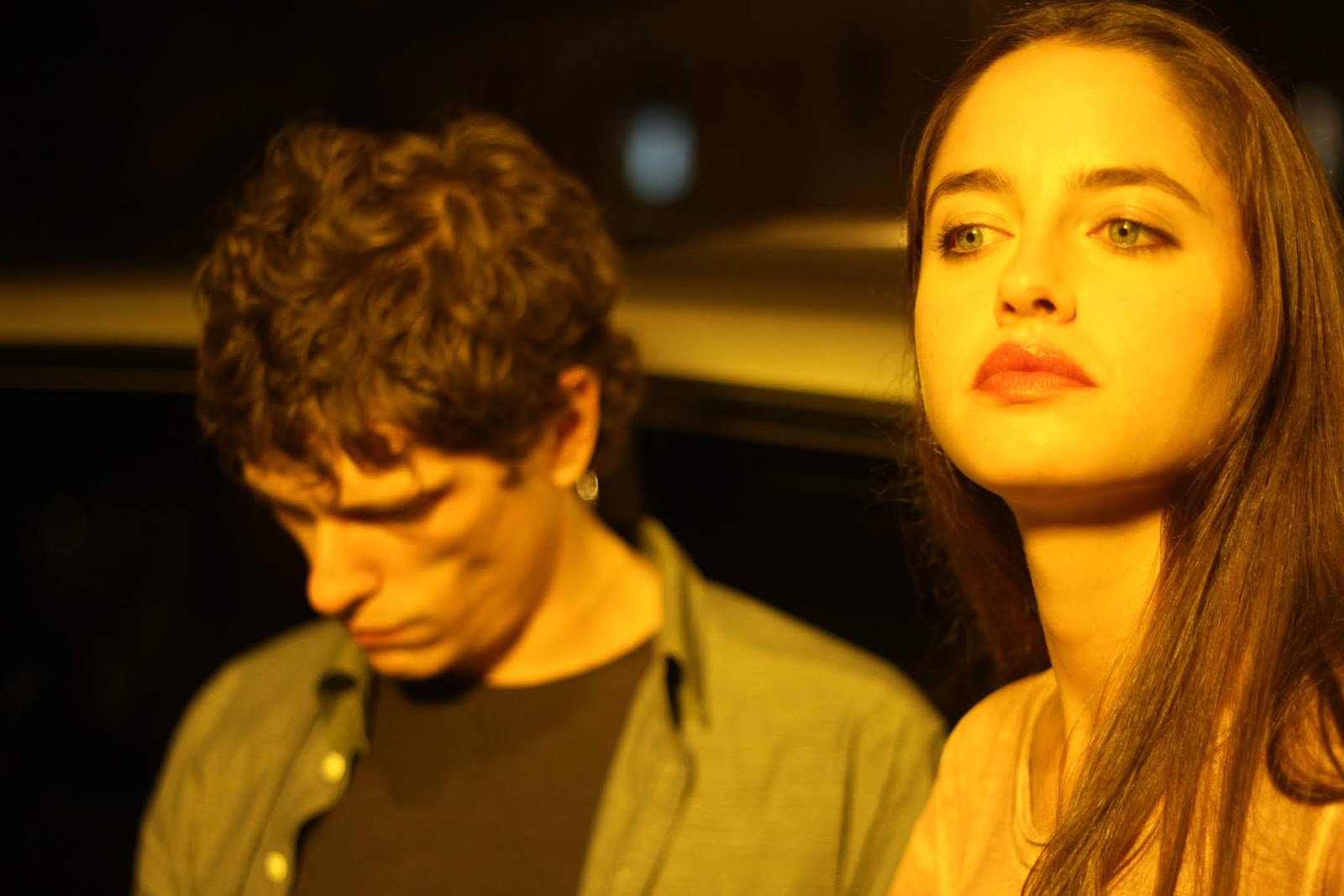
Matilde Gioli and Matteo Martari in a scene from 2Night
When she answered a casting call, Matilde Gioli’s just wanted to make a few extra bucks to support her university education. Months later, she was offered a starring role in one of Italy’s most successful contemporary films.

Born in Milan in 1989, Gioli studied at Beccaria High School and then graduated in Philosophy at the State University. “I never thought of becoming an actress. When I was at university, I worked various jobs. I was 21 years old. One day my mother found an announcement: they were looking for extras for a film by Paolo Virzì. So I went to audition. I did not expect anything," she explained in a recent interview with Forbes Magazine in Italy. She didn’t hear anything for four months. Then one day, she received word that Virzì wanted to meet her for a another audition. “The following day, he offered me the role of Serena Ossola in the film Human Capital. From there my career started.”

Matilde Gioli and Giovanni Ansando in a scene from Human Capital
Virzì’s 2013 Human Capital begins at the end, as a cyclist is run off the road by an SUV. As details emerge of the events leading up to the accident, the lives of the privileged and detached Bernaschi family intertwine with the Ossolas, struggling to keep their comfortable middle-class life. Gioli’s character, Serena Ossola, a free-spirited, independent thinker, gets into trouble when she falls in love with a young man, Luca Ambrosini, played brilliantly by Giovanni Anzaldo, who is on probation for a crime he didn’t commit. As he is facing another injustice, Serena stays by his side. The adults that surround the two are so dysfunctional and immersed in their own self-created dramas, it is up to Serena and Luca to find their own solution. When the parents inevitably get wind of what’s going on, they only make matters worse, just as the two suspected.

Although the film is graced with veteran talent, the scenes between Anzaldo and Gioli are electrifying. The strong chemistry between the two young actors combined with Virzi’s articulate direction made stars out of both of them. Since that breakout role, Gioli has appeared in 10 films and has received numerous awards, including the “L'Oréal Paris Award for the Cinema” during the 73rdVenice Film Festival. 

Ivan Silvestrini’s 2016 film 2Night premiered at the Rome Film Festival in the Alice nella Città program, a series of films dedicated to young people. Cleverly scripted, the films has only three speaking roles: Him, Her and Her Ex. Gioli of course takes on the role of “Her,” one of two young strangers who meet at a nightclub in Rome. The couple is only interested in a one-night stand, but the logistical problems of contemporary Rome put a dent in their plan. Over the course of the seemingly never-ending night, the conversation deepens, revealing an intellectual intimacy that captivates them both and brings them close together on an emotional level. The film was a stepping stone for Gioli, proving she has the talent and capacity to carry a film in a starring role. 

At the opposite end of the spectrum is Only for the Weekend. Directed by Gianfranco Gaioni who goes by the alias Director Kobayashi, the films is a loud, action packed comedy. The director is not aiming for political correctness as he pokes fun at a few stereotypes Italians have for the American culture. The film opens with beautiful shots of the Las Vegas skyline, and then follows a heist in which a briefcase full of cash is stolen. Towards the end of the film, the thief turns up in Milan looking to capitalize on the stolen goods.  When a recently fired copywriter addicted to psychiatric drugs get dumped by his frustrated wife, he runs into an old bully from high school that gets him mixed up with some petty thieves way in over their heads with this professional from Las Vegas. Gioli’s character, a local dominatrix whose clients pay to do her housework, is called in to help. 

Gioli currently has two films in production, including Giovanni Veronesi's remake of the Three Musketeers.

Human Capital and Only for the Weekend are available on Amazon.

- Jeannine Guilyard

Comments

Popular posts from this blog

The Sweetness and Genius of Giulietta Masina

Fellini and Masina on the set of "La Strada" As open-hearted and sunny as Federico Fellini was dark and complex, they were perfect counterpoints during a half-century of marriage and professional collaboration.  Nicknamed a  “female Chaplin” and described by Chaplin himself as  the actress who moved him most,  Giulietta Masina confronted the tragedy of her characters with an eternal innocence and enthusiasm that gave Italians hope in the most challenging of times.  Born in 1921 in San Giorgio di Piano, a commune north of Bologna, Masina was the oldest of four children born to a father who was a music professor and violinist and a mother who was a grade-school teacher. Her parents sent her as a child to live in Rome with her widowed aunt while she attended school there. As Masina took an early interest in gymnastics, her aunt saw in her a passion for performing and encouraged her to pursue acting. So after high school, Masina attended Rome’s La...

Alessandro Gassmann: Born to Act

Alessandro Gassmannin his directorial debut "Razzabastarda" Alessandro Gassmann is the son of the iconic Italian actor/director Vittorio Gassman and French actress Juliette Mayniel. He was born in 1965 and grew up around cinema royalty.  He made his cinema debut in 1982 at the age of 17 in his father's autobiographical film, "Di padre in figlio." He went on to study his craft under his father's direction at the Theatre Workshop of Florence.  Vittorio Gassman was very active in theater and seemed just as comfortable on stage as he did in front of the camera. Known for his powerful interpretations of Dante's "Inferno" and "Paradiso," it is no surprise that he nurtured his son's acting aspirations on stage before he launched his career in television and film. One of Gassmann's strong qualities, which he undoubtedly inherited from his father is his incredible range and ease in going from genre to genre. He can play ...

Ornella Muti: Five decades of Acting and Still Going Strong

Ornella Muti was born Francesca Romana Rivelli in Rome in 1955 to a Neapolitan father and an Estonian mother. She began her career as a model during her teenage years and made her film debut in 1970 with “La Moglie più bella” (The Most Beautiful Wife).  Her follow-up role was in the 1971 film, “Sole nella pelle” (Sun on the Skin), in which she played the daughter of wealthy parents who runs off with a hippie they don’t approve of. The film offers a telling journey through Italian society in the seventies, with its political climate, breathtaking seaside, and the styles and cars of that time.  Much of the film is set amid the sunny Italian seaside and captures the innocence and beauty of first love.   Muti made her American film debut in 1980 with "Flash Gordon." She played the role of Princess Aura. She’s appeared in two other American films, including “Oscar,” directed by John Landis and starring Don Ameche, Chazz Palminteri, and Sylvester Stallone. In 1992, she w...

A Conversation with Documentary Filmmaker Luigi Di Gianni

His documentary films have given voice to a people who would have otherwise been forgotten while preserving rituals and traditions no longer practiced. Visually stunning and emotionally moving, they reflect an Italy we’re not used to seeing in cinema.   Born in Naples in 1926, Luigi Di Gianni captured a dimension of Italy that people outside the South didn’t even know existed. He began his career working in the region of Basilicata, which back then was referred to as Lucania. He first visited the region with his parents when he was a boy. His father, being from the Lucanian village of Pescopagano, wanted to show his son his homeland.    That trip made an impression on the 9-year-old and created a deep affection that would one day inspire him to return. “I always remained very emotional about returning to this part of my homeland of Lucania,” he says. “It seemed like a different planet compared to Rome, where I lived. The tiring journey, the unpaved roads, the difficulti...

The Anthology Film Archives Presents: The Italian Connection: Poliziotteschi and Other Italo-Crime Films of the 1960s and '70's

June 19 – June 29 Influenced both by 1960s political cinema and Italian crime novels, as well as by French noir and American cop movies like "Dirty Harry" and "The French Connection," many Italian filmmakers in the late-60s and early-70s gradually moved away from the spaghetti western genre, trading lone cowboys for ‘bad’ cops and the rough frontier of the American west for the mean streets of modern Italy. Just as they had with their westerns, they reinvented the borrowed genre with their inimitable eye for style and filled their stories with the kidnappings, heists, vigilante justice, and brutal violence that suffused this turbulent moment in post-boom 1970s Italy. The undercurrent of fatalism and cynicism in these uncompromising movies is eerily reminiscent of the state of discontent in Italy today. ‘The Italian Connection’ showcases the diversity and innovation found in the genre, from the gangster noir of Fernando Di Leo’s "Caliber 9" ...