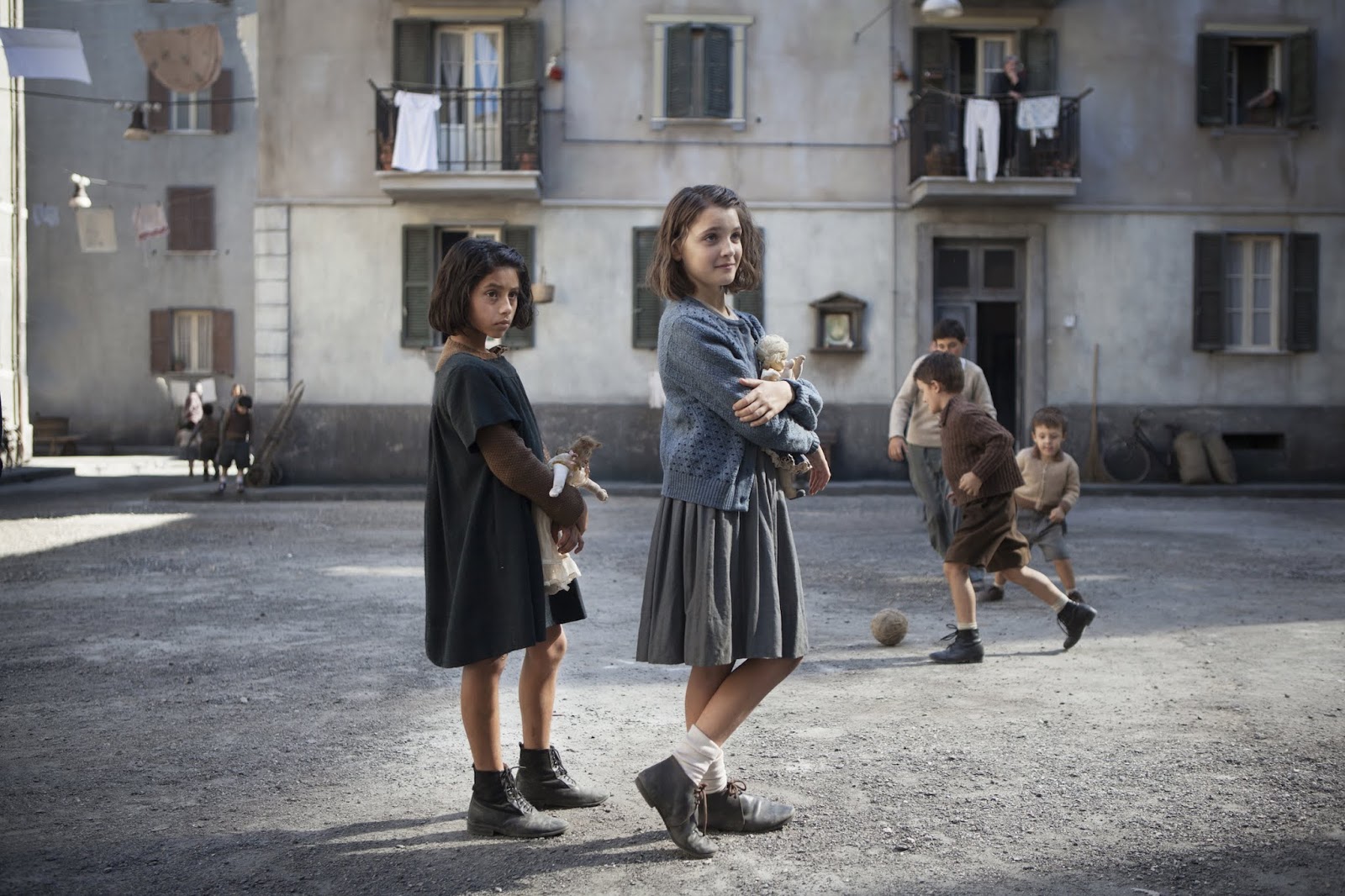
Meet Italy's Newest Stars- Elisa Del Genio & Ludovica Nasti


Directed by Saverio Costanzo and adapted from Elena Ferrante's novel My Brilliant Friend, HBO’s new television series is enchanting, mystical, suspenseful and full of drama.

A young veteran of contemporary Italian cinema, Costanzo brings to the table his modern style of filmmaking with nostalgic echoes of Italy's Golden Age of cinema. Set in 1950s working-class Naples, the films of Vittorio De Sica instantly come to mind.  Then add the subtle yet powerful performances by its two young stars, Elisa Del Genio and Ludovica Nasti, non-professional actresses, and Costanzo endearingly, perhaps even subconsciously, pays homage to the neorealist genre that De Sica was key in creating.

The development of a close friendship between Elena (Elisa Del Genio) and Lila (Ludovica Nasti) is the basis of the first episode, which introduces us to the harsh reality and flawed characters that surround them. The two girls are top in their class and while their teachers encourage their studies, the girls hesitate to embrace their intellectual gifts due to the society in which they live. 

Costanzo's sets are rich and sumptuous in their grey and earth tones yet ominous and creepy, giving the feeling that something bad is always waiting around the corner. He succeeded in creating an intriguing, fable-like world where fantasy and reality meet. 


My Brilliant Friend airs Sundays at 9pm on HBO. Click here to watch the trailer.

Comments

Popular posts from this blog

The Anthology Film Archives Presents: The Italian Connection: Poliziotteschi and Other Italo-Crime Films of the 1960s and '70's

June 19 – June 29 Influenced both by 1960s political cinema and Italian crime novels, as well as by French noir and American cop movies like "Dirty Harry" and "The French Connection," many Italian filmmakers in the late-60s and early-70s gradually moved away from the spaghetti western genre, trading lone cowboys for ‘bad’ cops and the rough frontier of the American west for the mean streets of modern Italy. Just as they had with their westerns, they reinvented the borrowed genre with their inimitable eye for style and filled their stories with the kidnappings, heists, vigilante justice, and brutal violence that suffused this turbulent moment in post-boom 1970s Italy. The undercurrent of fatalism and cynicism in these uncompromising movies is eerily reminiscent of the state of discontent in Italy today. ‘The Italian Connection’ showcases the diversity and innovation found in the genre, from the gangster noir of Fernando Di Leo’s "Caliber 9" ...

Ornella Muti: Five decades of Acting and Still Going Strong

Ornella Muti was born Francesca Romana Rivelli in Rome in 1955 to a Neapolitan father and an Estonian mother. She began her career as a model during her teenage years and made her film debut in 1970 with “La Moglie più bella” (The Most Beautiful Wife).  Her follow-up role was in the 1971 film, “Sole nella pelle” (Sun on the Skin), in which she played the daughter of wealthy parents who runs off with a hippie they don’t approve of. The film offers a telling journey through Italian society in the seventies, with its political climate, breathtaking seaside, and the styles and cars of that time.  Much of the film is set amid the sunny Italian seaside and captures the innocence and beauty of first love.   Muti made her American film debut in 1980 with "Flash Gordon." She played the role of Princess Aura. She’s appeared in two other American films, including “Oscar,” directed by John Landis and starring Don Ameche, Chazz Palminteri, and Sylvester Stallone. In 1992, she w...

Alessandro Gassmann: Born to Act

Alessandro Gassmannin his directorial debut "Razzabastarda" Alessandro Gassmann is the son of the iconic Italian actor/director Vittorio Gassman and French actress Juliette Mayniel. He was born in 1965 and grew up around cinema royalty.  He made his cinema debut in 1982 at the age of 17 in his father's autobiographical film, "Di padre in figlio." He went on to study his craft under his father's direction at the Theatre Workshop of Florence.  Vittorio Gassman was very active in theater and seemed just as comfortable on stage as he did in front of the camera. Known for his powerful interpretations of Dante's "Inferno" and "Paradiso," it is no surprise that he nurtured his son's acting aspirations on stage before he launched his career in television and film. One of Gassmann's strong qualities, which he undoubtedly inherited from his father is his incredible range and ease in going from genre to genre. He can play ...

Federico Fellini: A Look into the Life and Career of an Icon

A Fellini family portrait  “The term became a common word to describe something on the surface you can say is bizarre or strange, but actually is really like a painter working on a film,” said Martin Scorsese when asked to define “Felliniesque,” an adjective inspired by one of the greatest filmmakers of all time. The oldest of three children, Federico Fellini was born in the seaside town of Rimini in 1920. His father was a traveling salesman, so his mother was left to do the bulk of raising the children. One can argue that Fellini was born for his destiny. “You could tell that even as a child, he was different and unique. He was very intelligent, well above average. He was always the one to organize things, direct the others, make up games. He could control the other kids with just a look, said Fellini’s sister, Maddalena, in an interview with journalist Gideon Bachmann.  Not only was Fellini directing the children, but he was also putting on shows and charging ...

The Timeless Vision of Pier Paolo Pasolini

Pondering his films and poetry, I wonder if the uniqueness of Pier Paolo Pasolini's films was rooted in his unconventional childhood. Born in Bologna in 1922, Pasolini's father was a lieutenant in the army, and his family was always moving. He grew up in various small towns in Northern Italy. After his parents separated, he spent most of his time in his mother's hometown of Casarsa, in the region of Friuli Venezia Giulia. There, he grew to respect the area's peasant culture and began to write poetry in the region's dialect. He studied literature and art history at the University of Bologna and was drafted into the army during World War II. The war proved to be especially tragic for his family as his younger brother was executed by Communist partisans. Following the war, he returned to Casarsa where he worked as a teacher and ironically became a leading member of the Communist party there. Pasolini was later expelled from the party due to allegations of homo...