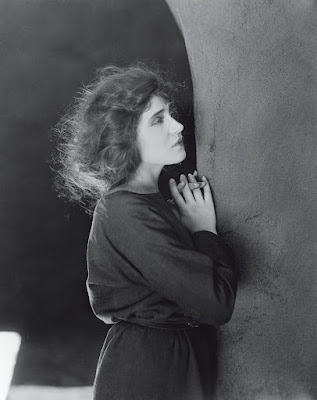
The Life and Times of Actress-turned-Activist Tina Modotti

An advocate for women’s freedoms in the early 20th century, her creative achievements are still celebrated today.

Tina Modotti was an artistic and literal revolutionary. Born Assunta Adelaide Luigia Modotti Mondini on Aug. 16, 1896, in Udine, Italy, Modotti quit elementary school at the age of 12 to earn money to help her family make ends meet. Her father immigrated to the United States, and in 1913, she joined him in San Francisco. There, she became involved in the performing arts and landed parts in plays, operas and films.

Modotti starred in three silent films during the early 1920s. Only one is still in circulation. Adapted from Elizabeth Dejeans’s 1917 novel “The Tiger’s Coat,” Roy Clements’ 1920 drama has stood the test of time due to its forward-thinking takes on racism and society’s views on interracial relationships. A feast for the eyes with elaborate sets and costumes, the film follows Maria de la Guarda, aka Jean Ogilvie (Modotti), as she assumes the identity of a dead woman to hide her ethnicity and marry the man of her dreams. With her simple yet stunning good looks, Modotti radiates the mystique she was known for her entire life from the moment she steps in front of the camera.


Watch “The Tiger’s Coat” on YouTube, with a special intro... 


Modotti could have cashed in on her exquisite beauty but was frustrated with the stereotypical roles being offered to her because of her Mediterranean look, so she left the movie industry. She became interested in photography and studied with legendary lensman Edward Weston. Their rapport turned into love, and the two moved to Mexico together in 1923. The change in scenery profoundly altered the course of Modotti’s life.


The couple became friends with the artists of the Mexican Renaissance, including iconic painter Frida Kahlo and her partner Diego Rivera. For the next several years, Modotti immersed herself in her craft, finding her own voice and style as a photographer. Meanwhile, the political influence of her friends was shaping her societal values, so much so that she joined the Mexican Communist Party in 1927. The line between art and politics blurred as she adapted to her new life in Mexico. She photographed people of all social classes, highlighting the plight of the poor amid the political unrest of the time.

Expelled from Mexico because of her activism, Modotti spent time in various countries throughout Europe during the mid-’30s, including Spain, where she aided orphaned children during the Spanish Civil War. During those years, she connected with prominent artists and intellectuals like Chilean poet Pablo Neruda and Hungarian-American war photographer Robert Capa, both of whom had also journeyed to Spain to offer their support.


Modotti returned to Mexico in 1939 but passed away on Jan. 5, 1942, under suspicious circumstances. The cause of death was listed as heart failure. She was only 45 years old. 


Today, Modotti is highly regarded as a photographer and is frequently the subject of exhibitions around the world. Last year, the Museo delle Culture in Milan played host to the exhibit “Tina Modotti: Women, Mexico, and Freedom.” Curator Biba Giacchetti considers Modotti not only a titan of photography but also a warrior for civil justice. “During her short lifetime, Tina Modotti fought on the front line for freer and fairer humanity, and to bring aid to the civilian victims of conflicts like the Spanish Civil War,” she stated in material published in connection with the exhibit.

The Museum of Modern Art in New York has also showcased Modotti’s work, with 35 photographs taken between 1924 and 1927. Click here to view them on the museum’s website.


A six-part miniseries is being made about her life, with Monica Bellucci in the starring role and Edoardo De Angelis in the director’s chair. Produced by Argentinian filmmaker Paula Alvarez Vaccaro, the series will be titled “Radical Eye: The Life and Times of Tina Modotti.”


Several books about her life and art are available on Amazon. A restored version of “The Tiger’s Coat” is available on YouTube (see above) along with a 1983 documentary titled “Frida Kahlo & Tina Modotti.” Watch it below...


- Written by Jeannine Guilyard for the March 2022 issue of Fra Noi Magazine. Click here to subscribe.

Comments

Popular posts from this blog

Ornella Muti: Five decades of Acting and Still Going Strong

Ornella Muti was born Francesca Romana Rivelli in Rome in 1955 to a Neapolitan father and an Estonian mother. She began her career as a model during her teenage years and made her film debut in 1970 with “La Moglie più bella” (The Most Beautiful Wife).  Her follow-up role was in the 1971 film, “Sole nella pelle” (Sun on the Skin), in which she played the daughter of wealthy parents who runs off with a hippie they don’t approve of. The film offers a telling journey through Italian society in the seventies, with its political climate, breathtaking seaside, and the styles and cars of that time.  Much of the film is set amid the sunny Italian seaside and captures the innocence and beauty of first love.   Muti made her American film debut in 1980 with "Flash Gordon." She played the role of Princess Aura. She’s appeared in two other American films, including “Oscar,” directed by John Landis and starring Don Ameche, Chazz Palminteri, and Sylvester Stallone. In 1992, she w...

The Anthology Film Archives Presents: The Italian Connection: Poliziotteschi and Other Italo-Crime Films of the 1960s and '70's

June 19 – June 29 Influenced both by 1960s political cinema and Italian crime novels, as well as by French noir and American cop movies like "Dirty Harry" and "The French Connection," many Italian filmmakers in the late-60s and early-70s gradually moved away from the spaghetti western genre, trading lone cowboys for ‘bad’ cops and the rough frontier of the American west for the mean streets of modern Italy. Just as they had with their westerns, they reinvented the borrowed genre with their inimitable eye for style and filled their stories with the kidnappings, heists, vigilante justice, and brutal violence that suffused this turbulent moment in post-boom 1970s Italy. The undercurrent of fatalism and cynicism in these uncompromising movies is eerily reminiscent of the state of discontent in Italy today. ‘The Italian Connection’ showcases the diversity and innovation found in the genre, from the gangster noir of Fernando Di Leo’s "Caliber 9" ...

Model/Actress Anna Falchi

Anna Falchi was born Anna Kristiina Palomaki, on April 22, 1972, in Tampere, Finland. Her mother, Kaarina Palomaki Sisko, is Finnish, while her father, Benito "Tito" Falchi, is from Romagna, Italy. Growing up in Italy, Anna was a tomboy, and had a fervent imagination. She is known mostly for her prolific career in modelling. However, she tried her hand at acting and landed a role in one of my favorite Italian comedies, Nessun messaggio in segreteria . I consider it my one of my favorites because it brought together so many amazing, talented filmmakers during a time when they were all just starting out. Those filmmakers, Pierfrancesco Favino, Valerio Mastandrea, Luca Miniero and Paolo Genovese are now huge names in contemporary Italian cinema, so it's great to look back and see their work in a low-profile film completely different from the bigger-budget stardom they now know.   Watch the trailer . Anna Falchi started her career as a...

Ettore Scola explores enduring friendships and lost ideals in 'C’eravamo tanto amati'

A scene from "C'eravamo tanti amati" Mixing both tragedy and humor, Ettore Scola ’s 1974 film “C’eravamo tanto amati” (“We All Loved Each Other So Much”) follows 30 years in the lives of three men and the woman they each adore. By examining how his generation changed after the war, Scola makes a film that reflects its era. Scola explores the moral, political and emotional evolution of Italy’s postwar generation and, in doing so, creates a film that is a chronicle of its time and a love letter to cinema. The story begins in the aftermath of World War II. Three friends — Antonio ( Nino Manfredi ), Gianni (Vittorio Gassman) and Nicola (Stefano Satta Flores) — emerge from the Italian Resistance with a shared dream of justice, equality and social renewal. They are united by their hope that the sacrifices of war will lead to a better world. But the decades that follow prove to be challenging as Italy undergoes massive social changes, from the postwar economic boom to the politi...

Federico Fellini: A Look into the Life and Career of an Icon

A Fellini family portrait  “The term became a common word to describe something on the surface you can say is bizarre or strange, but actually is really like a painter working on a film,” said Martin Scorsese when asked to define “Felliniesque,” an adjective inspired by one of the greatest filmmakers of all time. The oldest of three children, Federico Fellini was born in the seaside town of Rimini in 1920. His father was a traveling salesman, so his mother was left to do the bulk of raising the children. One can argue that Fellini was born for his destiny. “You could tell that even as a child, he was different and unique. He was very intelligent, well above average. He was always the one to organize things, direct the others, make up games. He could control the other kids with just a look, said Fellini’s sister, Maddalena, in an interview with journalist Gideon Bachmann.  Not only was Fellini directing the children, but he was also putting on shows and charging ...