Open Roads: New Italian Cinema 2018 Edition

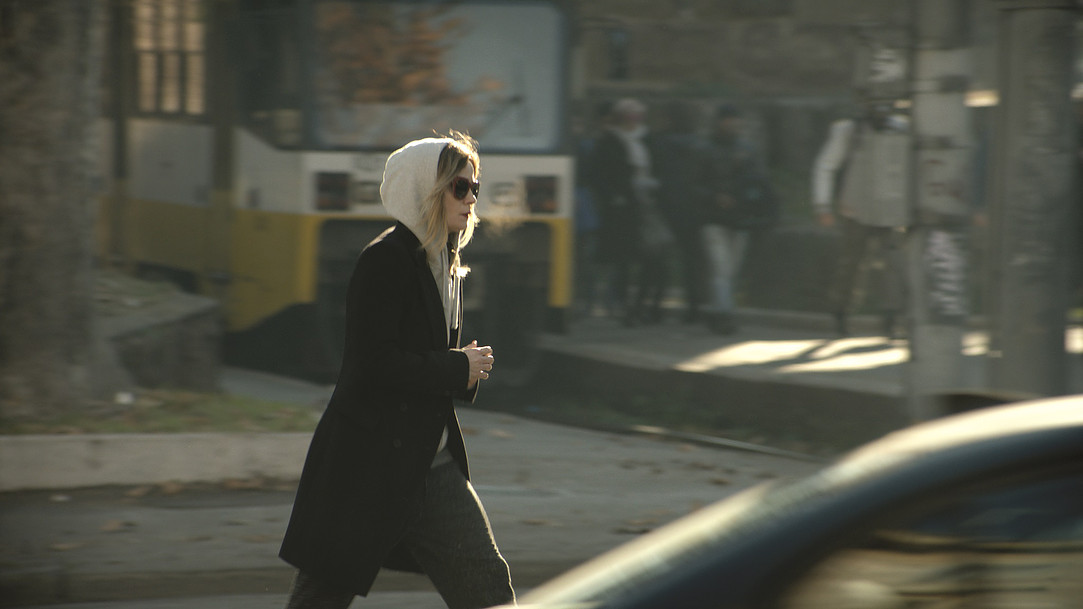
Boys Cry
Since the early 2000's, I've always looked forward to the month of June because of the remarkable selection of contemporary Italian films shown in New York at Lincoln Center's annual series, Open Roads: New Italian Cinema


This year's diverse lineup, presented by the Film Society of Lincoln Center and Istituto Luce Cinecittà, includes the Berlin Film Festival sleeper hit by the D’Innocenzo brothers, Boys Cry, the story of two best friends who get in over their heads with organized crime;  Innovative director Fulvio Risuleo's Look Up; Fabio Grassadonia and Antonio Piazza’s second feature, Sicilian Ghost Story; Sergio Castellitto’s emotionally-driven Fortunata, with Jasmine Trinca, who won the Un Certain Regard Best Actress prize at last year’s Cannes Film Festival; and three works by returning Open Roads filmmakers: Marco Tullio Giordana’s Name of a Woman, Ferzan Ozpetek’s Naples in Veils, starring the talented Giovanna Mezzogiorno and Alessandro Borghi, Francesca Comencini's Locarno hit Stories of Love That Cannot Belong to This World and Paolo Genovese's star-studded The Place.


Naples in Veils
The Taviani Brothers' new film Rainbow: A Private Affair, which is also their last together as Vittorio passed away in April, will be paired with a special screening of their 1983 classic, The Night of the Shooting Stars.

Rainbow: A Private Affair
Since its first edition back in 2000, Open Roads has been known for its compelling Q&A's with directors and actors behind the contemporary masterpieces, and the 2018 edition is no different with an impressive list of filmmakers slated to be in attendance:


Fabio Grassadonia & Antonio Piazza to present Sicilian Ghost Story on Opening Night
Giorgio Ferrero to present the documentary Beautiful Things
Damiano & Fabio D’Innocenzo to present Boy's Cry
Silvia Luzi & Luca Bellino to present Crater
Francesco Patierno to present Diva!
Vincenzo Marra to present Equilibrium
Marco Tullio Giordana to present Nome di donna
Ferzan Ozpetek to present Naples in Veils
Paolo Genovese to present The Place
Roberto De Paolis to present Pure Hearts
Lucia Mancino to present Stories of Love That Cannot Belong to This World 


The Place
The 18th edition of Open Roads: New Italian Cinema will be held at Lincoln Center in New York May 31 - June 6 and will be followed by Visconti,a special retrospective dedicated to a great maestro of Italian cinema, Luchino Visconti.


Stories of Love That Cannot Belong to This World

Comments

Popular posts from this blog

Ornella Muti: Five decades of Acting and Still Going Strong

Ornella Muti was born Francesca Romana Rivelli in Rome in 1955 to a Neapolitan father and an Estonian mother. She began her career as a model during her teenage years and made her film debut in 1970 with “La Moglie più bella” (The Most Beautiful Wife).  Her follow-up role was in the 1971 film, “Sole nella pelle” (Sun on the Skin), in which she played the daughter of wealthy parents who runs off with a hippie they don’t approve of. The film offers a telling journey through Italian society in the seventies, with its political climate, breathtaking seaside, and the styles and cars of that time.  Much of the film is set amid the sunny Italian seaside and captures the innocence and beauty of first love.   Muti made her American film debut in 1980 with "Flash Gordon." She played the role of Princess Aura. She’s appeared in two other American films, including “Oscar,” directed by John Landis and starring Don Ameche, Chazz Palminteri, and Sylvester Stallone. In 1992, she w...

The Anthology Film Archives Presents: The Italian Connection: Poliziotteschi and Other Italo-Crime Films of the 1960s and '70's

June 19 – June 29 Influenced both by 1960s political cinema and Italian crime novels, as well as by French noir and American cop movies like "Dirty Harry" and "The French Connection," many Italian filmmakers in the late-60s and early-70s gradually moved away from the spaghetti western genre, trading lone cowboys for ‘bad’ cops and the rough frontier of the American west for the mean streets of modern Italy. Just as they had with their westerns, they reinvented the borrowed genre with their inimitable eye for style and filled their stories with the kidnappings, heists, vigilante justice, and brutal violence that suffused this turbulent moment in post-boom 1970s Italy. The undercurrent of fatalism and cynicism in these uncompromising movies is eerily reminiscent of the state of discontent in Italy today. ‘The Italian Connection’ showcases the diversity and innovation found in the genre, from the gangster noir of Fernando Di Leo’s "Caliber 9" ...

Model/Actress Anna Falchi

Anna Falchi was born Anna Kristiina Palomaki, on April 22, 1972, in Tampere, Finland. Her mother, Kaarina Palomaki Sisko, is Finnish, while her father, Benito "Tito" Falchi, is from Romagna, Italy. Growing up in Italy, Anna was a tomboy, and had a fervent imagination. She is known mostly for her prolific career in modelling. However, she tried her hand at acting and landed a role in one of my favorite Italian comedies, Nessun messaggio in segreteria . I consider it my one of my favorites because it brought together so many amazing, talented filmmakers during a time when they were all just starting out. Those filmmakers, Pierfrancesco Favino, Valerio Mastandrea, Luca Miniero and Paolo Genovese are now huge names in contemporary Italian cinema, so it's great to look back and see their work in a low-profile film completely different from the bigger-budget stardom they now know.   Watch the trailer . Anna Falchi started her career as a...

Ettore Scola explores enduring friendships and lost ideals in 'C’eravamo tanto amati'

A scene from "C'eravamo tanti amati" Mixing both tragedy and humor, Ettore Scola ’s 1974 film “C’eravamo tanto amati” (“We All Loved Each Other So Much”) follows 30 years in the lives of three men and the woman they each adore. By examining how his generation changed after the war, Scola makes a film that reflects its era. Scola explores the moral, political and emotional evolution of Italy’s postwar generation and, in doing so, creates a film that is a chronicle of its time and a love letter to cinema. The story begins in the aftermath of World War II. Three friends — Antonio ( Nino Manfredi ), Gianni (Vittorio Gassman) and Nicola (Stefano Satta Flores) — emerge from the Italian Resistance with a shared dream of justice, equality and social renewal. They are united by their hope that the sacrifices of war will lead to a better world. But the decades that follow prove to be challenging as Italy undergoes massive social changes, from the postwar economic boom to the politi...

Federico Fellini: A Look into the Life and Career of an Icon

A Fellini family portrait  “The term became a common word to describe something on the surface you can say is bizarre or strange, but actually is really like a painter working on a film,” said Martin Scorsese when asked to define “Felliniesque,” an adjective inspired by one of the greatest filmmakers of all time. The oldest of three children, Federico Fellini was born in the seaside town of Rimini in 1920. His father was a traveling salesman, so his mother was left to do the bulk of raising the children. One can argue that Fellini was born for his destiny. “You could tell that even as a child, he was different and unique. He was very intelligent, well above average. He was always the one to organize things, direct the others, make up games. He could control the other kids with just a look, said Fellini’s sister, Maddalena, in an interview with journalist Gideon Bachmann.  Not only was Fellini directing the children, but he was also putting on shows and charging ...